
Acadia Parish Criminal Case Files
A criminal court record in Acadia Parish is the court case file kept after a prosecutor files a bill of information, indictment, complaint, or other charging paper. It is not the same thing as a jail roster entry. The arrest starts with law enforcement, while the court case begins when the charge is filed and docketed. Once filed, the Acadia Parish Clerk of Court is the main local custodian for the criminal case file, copy requests, criminal history searches, and certified court copies. The Clerk states that criminal lawsuit records have been kept with other parish records since the parish was created in 1887.
Felony criminal matters route through the 15th Judicial District Court, which serves Acadia, Lafayette, and Vermilion parishes. Acadia Parish also has lower local courts, including city, mayor's, and justice of the peace courts, that may handle traffic, ordinance, small local matters, or bench warrants tied to missed appearances. A person checking a criminal case should match the court on the summons, bill of information, citation, or warrant. A district court felony, a Crowley City Court ticket, and a justice of the peace matter may not be found through the same practical channel.
The closer charge-level view is handled in Arrest Records & Charges. Current custody belongs with Inmate Records, and active warrant questions belong with Warrant Records.
Find Acadia Parish Criminal Court Records
Acadia Parish criminal court records should be searched as a set of channels, not as one guaranteed public database. Clerk Connect is the online Louisiana clerk portal that may include civil suits, criminal cases, property records, land records, e-recording, and e-filing for participating clerk offices. The public shell is dynamic and subscription-oriented, so the exact Acadia criminal search fields were not visible in the research capture. If the portal does not show the case, use the Clerk's direct copy and research channels before assuming the case does not exist.
- Start with the defendant name, case number, ticket number, or court notice, then check whether the matter is district court, city court, mayor's court, or another local court.
- Use Clerk Connect if Acadia criminal access is enabled for the record type, or use the 15th JDC Court Calendar for hearing-date context.
- Call the Acadia Parish Clerk of Court at (337) 788-8881, or ask for Copy and Research extension 332 for copy or older-record questions.
- For older files, visit the Clerk's records and research counters because official research notes say written indexes and computer access date to 1887.
- Request a certified copy when the criminal court record must be used for court, licensing, immigration, or another formal purpose.
The Clerk's fee page lists a criminal history search at $20 for a 30-year search. Records older than 30 years are handled through indexes and public viewing during normal business hours, and an appointment may be needed if the older criminal file remains of record. Copies from older criminal history files are listed at $1.00 per page for public copies or $2.00 per mailed page, with $5 added for certification. These amounts come from the local Clerk fee page, so confirm the current fee before sending money.
The state law image assigned to this Acadia Parish criminal court records page comes from Louisiana Code of Criminal Procedure Article 971 et seq., the expungement framework used when eligible criminal records are restricted from normal public view.
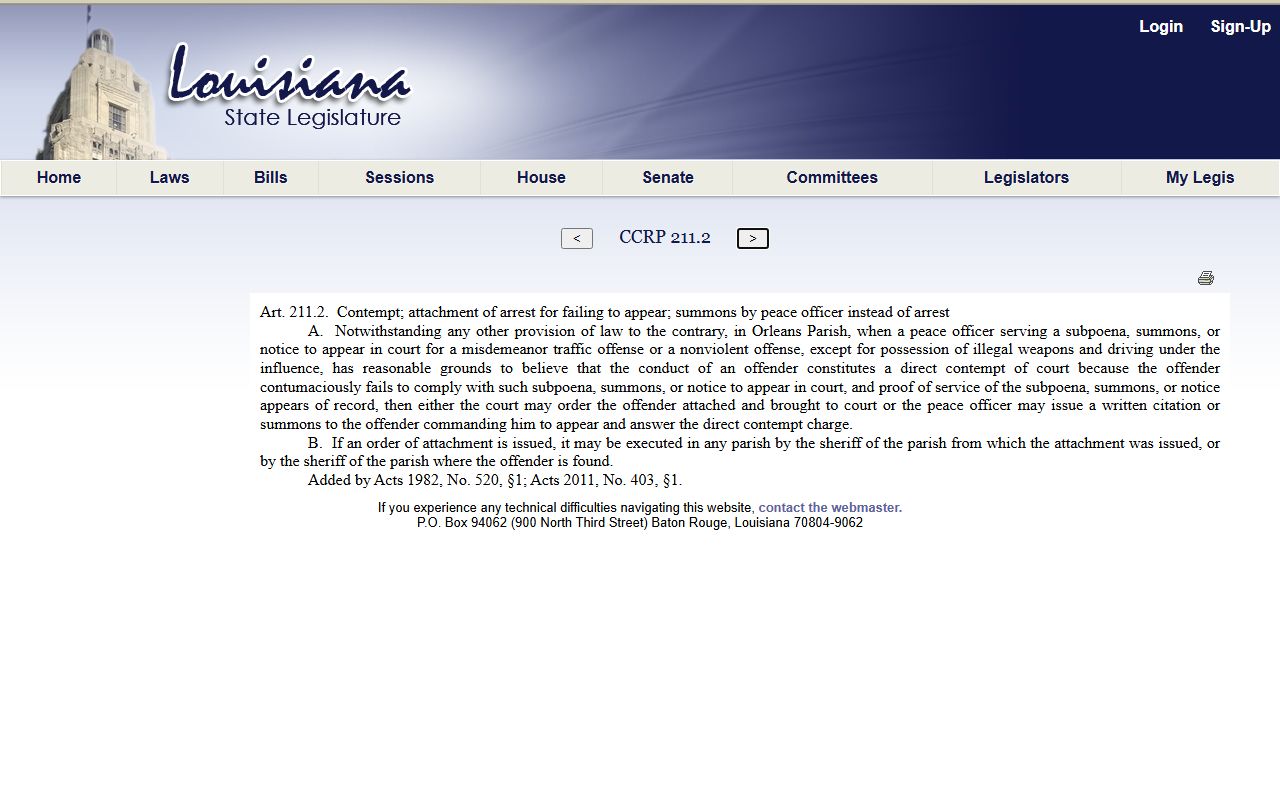
That source matters because a Clerk search may be accurate and still omit records that a court has expunged or removed from ordinary public access.
Acadia Parish Criminal Case Flow
Criminal case files change as a case moves. Early entries may only show the charge and first court setting. Later entries may show arraignment minutes, motions, bond activity, continuances, plea papers, trial settings, disposition, probation terms, or sentencing minutes. The docket is the running list of those events. A minute entry is the court's note of what happened in court. A disposition is the outcome of a charge or case.
Case flow: Charges Filed › Arraignment › Pretrial and Motions › Plea or Trial › Disposition › Sentencing
| Stage | What the Criminal Court Record May Show |
|---|---|
| Charges filed | Bill of information, indictment, complaint, count list, statute reference, prosecutor filing, and opening docket entry. |
| Arraignment | The first formal answer to the charge, often with plea, counsel, bond, and next court date entries. |
| Pretrial and motions | Discovery, continuances, suppression motions, bond motions, subpoenas, orders, and hearing minutes. |
| Plea or trial | Guilty plea, not guilty verdict, acquittal, mistrial, jury activity, or plea agreement terms if filed. |
| Disposition and sentencing | Final outcome, sentence, probation, fines, costs, revocation terms, or dismissal entries. |
The 15th Judicial District Attorney files and prosecutes criminal matters for Acadia, Lafayette, and Vermilion parishes. The Acadia Parish courthouse office is listed on the DA location page. Eligible indigent defendants are represented through the District 15 public defender system, which has an Acadia office in Crowley.
What Acadia Parish Criminal Records Show
Research did not expose a live public sample Acadia criminal case detail screen, so the field list below stays tied to fields supported by the Clerk, court calendar, fee schedule, and standard court-file inventory in the research file. Do not treat it as a promise that every online result will show every field. Certified copies or complete files may require a Clerk request, especially where the online portal only shows an index or docket summary.
| Field | What It Shows |
|---|---|
| Case or docket number | The court's tracking number, if visible or provided by the Clerk. |
| Defendant and attorneys | The accused person, counsel of record, public defender, or prosecutor entries when public. |
| Division or judge | The 15th JDC division, judge, commissioner, or local court tied to the matter. |
| Charges | Filed counts, charge descriptions, charge level, statute reference, or amended charge entries. |
| Hearings and minutes | Arraignments, pretrial settings, continuances, motion hearings, trial dates, and minute entries. |
| Disposition | Guilty plea, dismissal, acquittal, nolle prosequi, conviction, or other final charge outcome. |
| Sentence and costs | Jail, probation, fines, fees, bond, revocation, or payment-related entries when part of the case file. |
The electronic filing and court-record image assigned here comes from Louisiana Code of Civil Procedure Article 253, which addresses official electronic records and protected identifiers in filings.
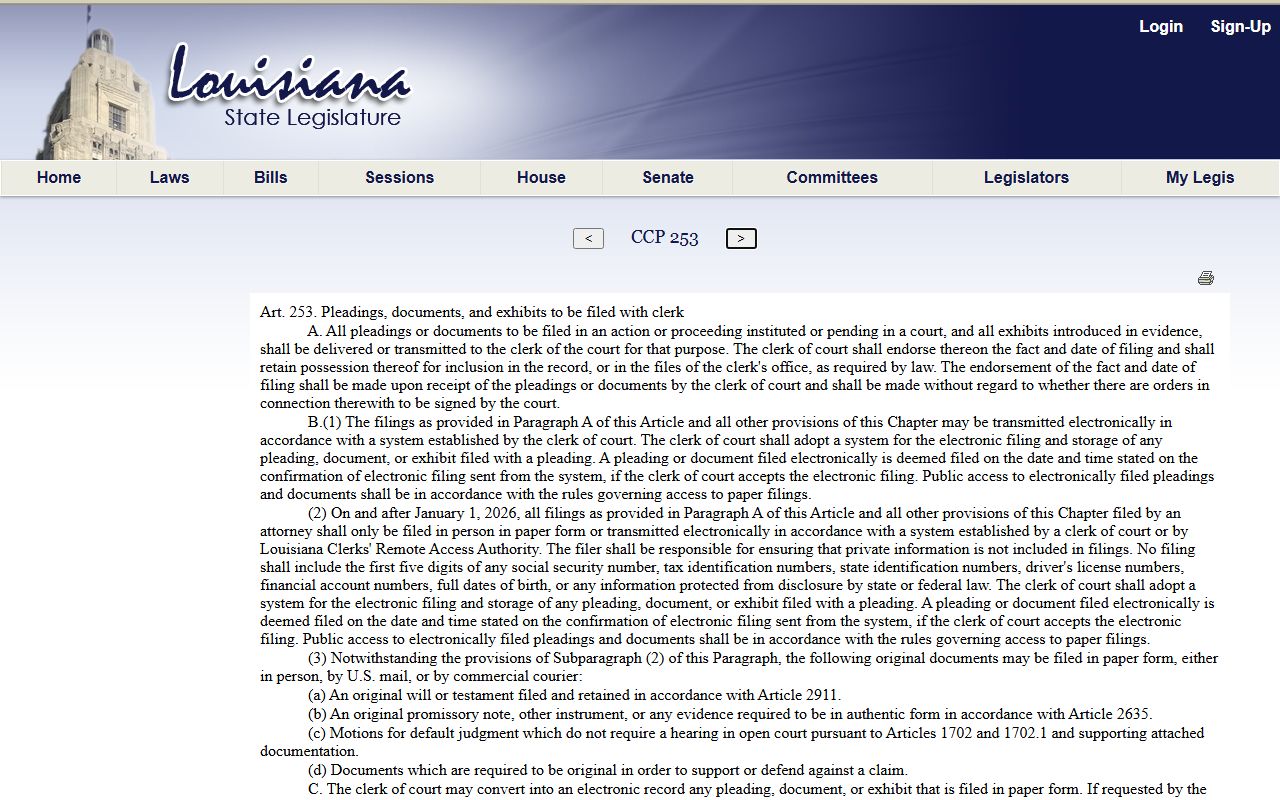
That redaction rule is practical for criminal court records because court filings can include private identifiers that should not appear in public copies.
The local access record is stronger when paired with Clerk copy channels. The Acadia Parish Clerk's Research Department uses original records, microfilm, electronic imaging, written indexes, and computer access. For criminal history searches, the Clerk distinguishes 30-year searches from older files that may require index use and appointment-based viewing.
Charges vs Convictions
A filed charge is an accusation that the prosecutor has placed before the court. A conviction is the result of a guilty plea or a finding of guilt after trial. Acadia Parish criminal court records can show charges that were amended, reduced, dismissed, or not proven. Read each count separately. One arrest can lead to several charges, and each charge can have a different outcome.
| Point | Charge | Conviction |
|---|---|---|
| Meaning | A formal accusation filed in court. | A guilty plea or guilty finding on a count. |
| Where it appears | Charging document, docket, minute entries, and amended pleadings. | Disposition, plea, verdict, judgment, sentencing, and probation entries. |
| Why it changes | Counts may be added, reduced, dismissed, or nolle prosequi. | The conviction stays tied to the final outcome unless later changed by court order. |
| How to verify | Check the most recent charge status and filed amendments. | Request certified disposition or sentencing minutes from the Clerk. |
For a closer look at filed charges after arrest, use the Acadia Parish court charge records page. For all case types, use court records.
Restricted Acadia Parish Criminal Records
Louisiana public-records law supports inspection and copies, but it does not make every criminal file public. Juvenile records are restricted by Louisiana Children's Code Article 412. Adoption-related records are confidential under Louisiana Children's Code Article 1188. Sealed records, expunged records, mental health information, minors' names, financial account numbers, Social Security numbers, protected addresses, and safety-sensitive material may be withheld or redacted.
The juvenile confidentiality image assigned to this criminal court record topic comes from the official Children's Code Article 412 source.
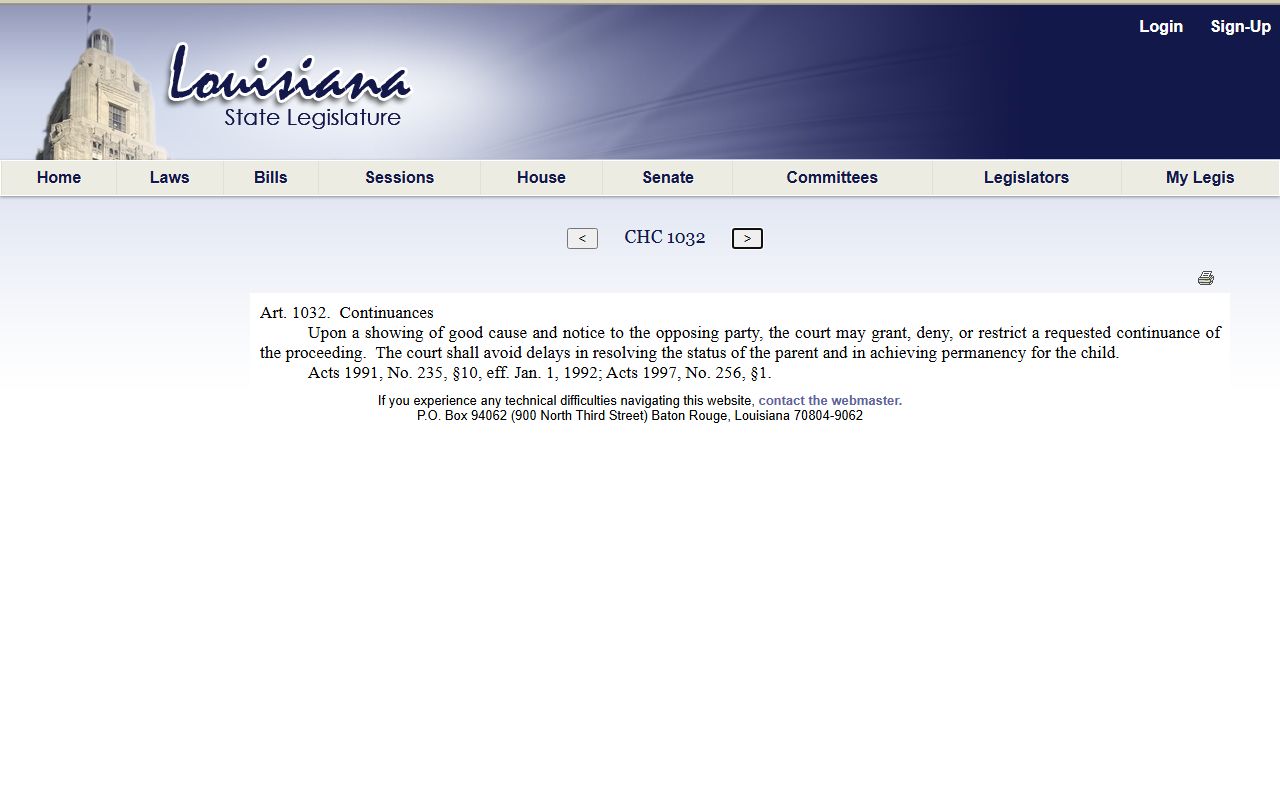
Juvenile restrictions are a key reason public criminal searches should not be read as a complete list of every law enforcement or court contact.
Adoption confidentiality can also affect family or juvenile-related case material that appears near criminal, custody, or protection matters. The assigned source image for Children's Code Article 1188 reflects that separate confidentiality rule.
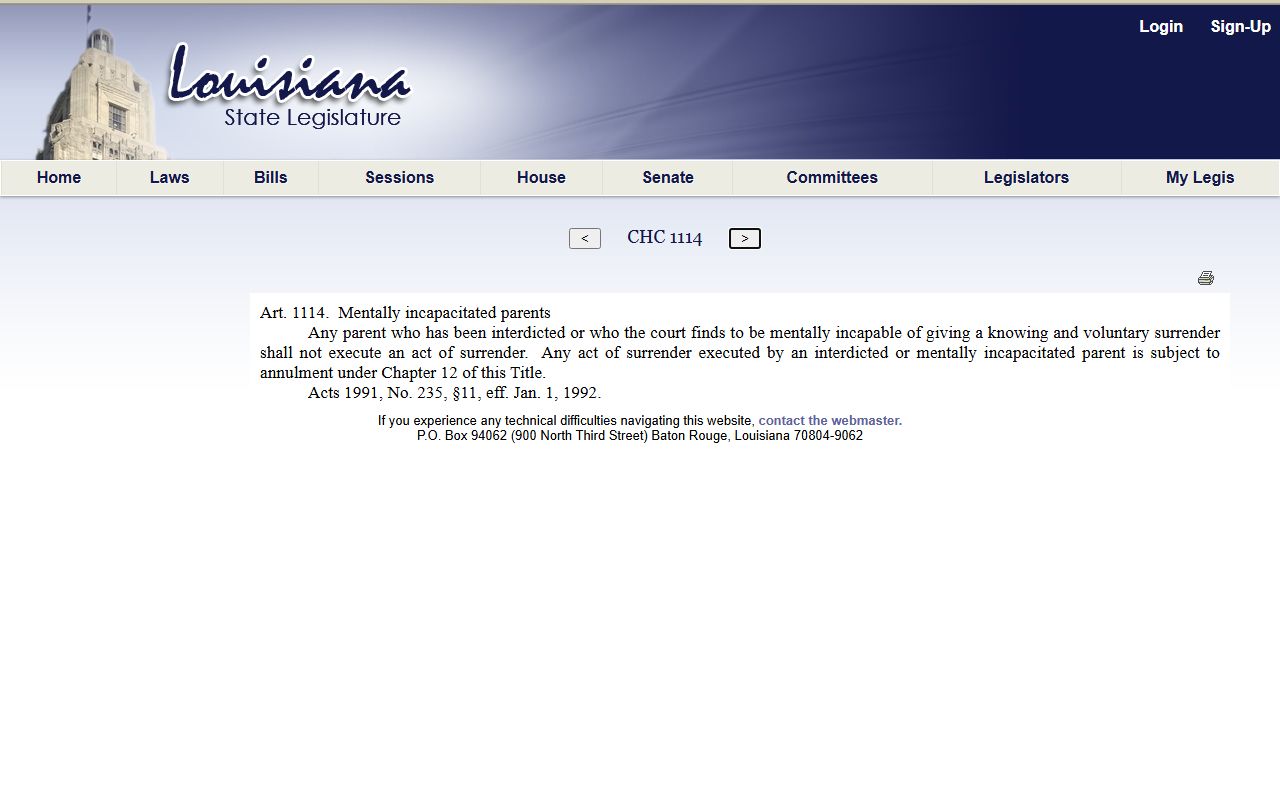
When a Clerk search reaches a sealed or confidential area, the proper next step is a court order or authorized request, not a broader public search.
Sealed vs Expunged Records
In Louisiana, expungement is a court process. A person usually files a petition in the court connected to the arrest or prosecution, serves required agencies, and waits for the judge to rule. The research did not locate an Acadia-specific expungement packet or local filing fee, so use the Clerk for current local filing requirements. The result usually restricts public access to eligible arrest and prosecution records while preserving access for agencies that are allowed by law.
| Point | Sealed | Expunged |
|---|---|---|
| Public view | Removed from ordinary inspection by court order or law. | Restricted from public access under the Louisiana expungement framework. |
| Agency access | Some agencies may retain authorized nonpublic access. | Law enforcement or statutory users may still have limited access. |
| How it happens | By rule, statute, or court order tied to the record type. | By petition, service, and judicial order when eligibility is met. |
| Local path | Ask the Clerk or court about the order controlling access. | File through the court connected to the Acadia Parish arrest or case. |
The district clerk fee authority image assigned to this page comes from La. R.S. 13:841, while the local Acadia Clerk fee schedule remains the best source for current copy and search amounts.
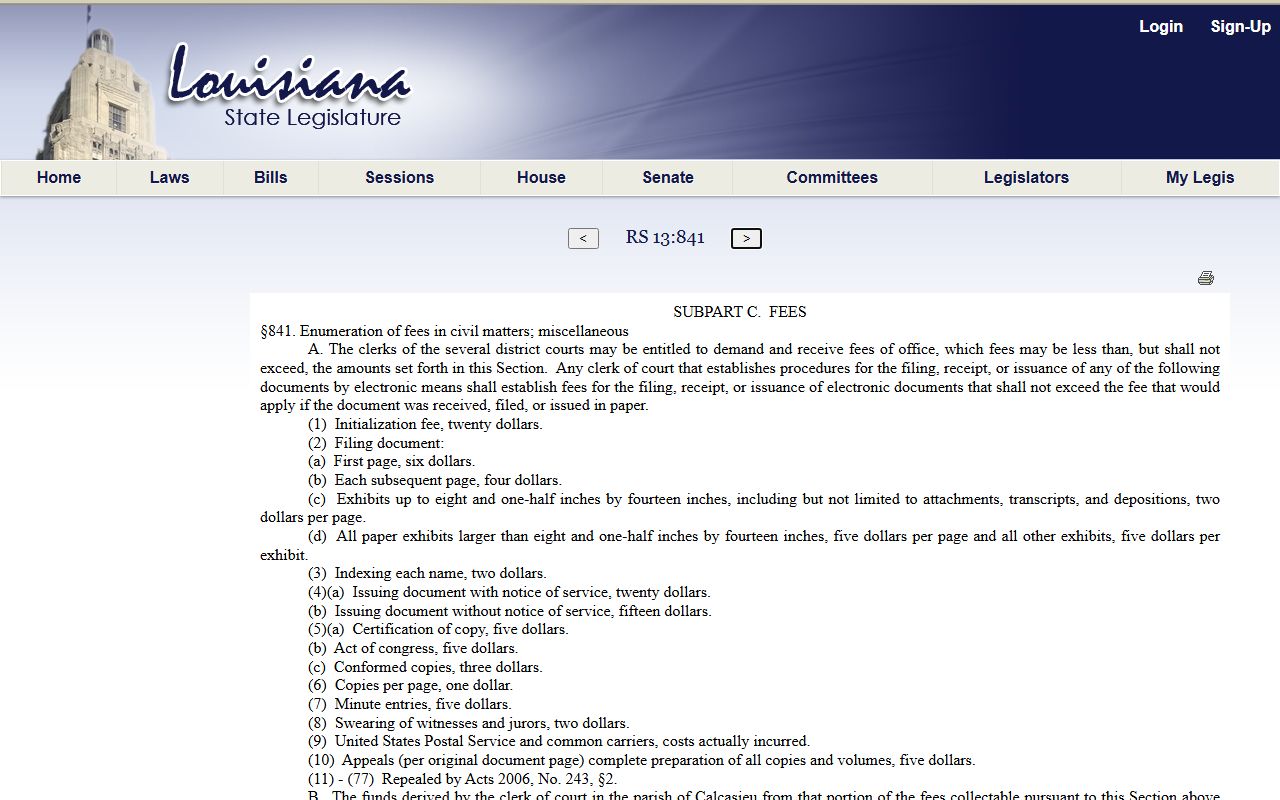
Fee authority and local fee schedules matter when a person needs a certified disposition, sentencing minute, or older criminal history search.
Public Access to Criminal Records
La. R.S. 44:1 defines public records broadly, and La. R.S. 44:32 sets duties for custodians to present public records and provide copies subject to law. In Acadia Parish, that means a criminal case search may use online access, in-person Clerk research, a written request, copy and certification service, or court calendar confirmation. The Clerk's public-records request form is useful when a record is not handled by a standard copy request.
Key point: Public access law supports inspection and copying, but it does not override juvenile, sealed, expunged, safety, or protected-identifier limits.
The manifest also assigns a source image from La. R.S. 9:221, which concerns marriage-license authority rather than criminal procedure.
Its relevance here is institutional: Louisiana parish clerks carry court-record duties across many record types, so the Acadia Clerk is still the correct local office for certified criminal case copies.
Important: Public criminal court records are not FCRA consumer reports and should not be used for credit, employment, housing, insurance, or any other regulated screening purpose.